

Why Camera and Radar Calibration Matters After Windshield and Bumper Work for Menomonee Falls, WI, Drivers
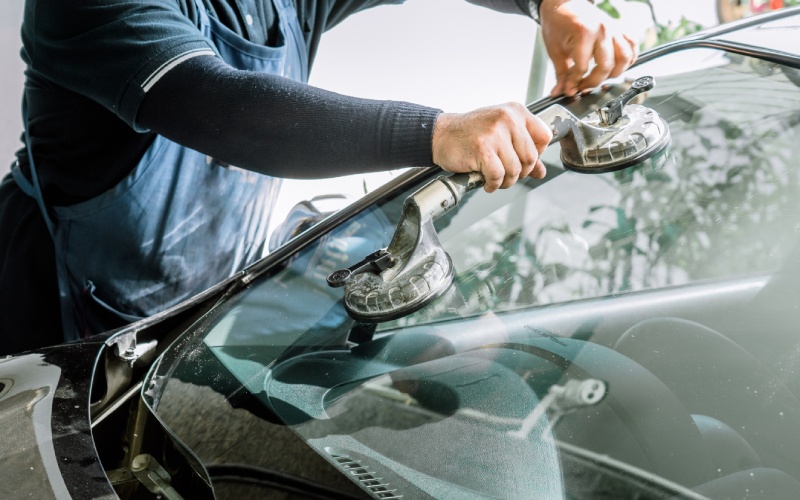
Russ Darrow Collision Center of Waukesha – Why Camera and Radar Calibration Matters After Windshield and Bumper Work for Menomonee Falls, WI, Drivers
Modern vehicles rely on a network of forward-facing cameras, radar behind bumper covers, and ultrasonic sensors to support the safety tech you count on every day—lane centering, automatic emergency braking, blind-spot alerts, and more. When you replace a windshield, repair a bumper, or realign suspension components, those sensors can shift just enough to throw off the entire system. That is why calibration after glass or bumper work is not optional—it is essential. For Menomonee Falls, WI drivers navigating county roads, roundabouts, and I-41 traffic, a properly calibrated system can be the difference between a timely alert and a late response.
Let’s demystify what happens after repairs. First, a technician performs a pre-scan to document system status and fault codes. After the glass or bumper job is complete—and the vehicle’s ride height, tire pressures, and alignment are verified—the vehicle is positioned on a precisely measured, level surface with calibration targets placed at exact distances and angles. Cameras undergo static calibration with highly specific targets; radar modules may require both static aiming and a dynamic drive on a prescribed route at set speeds. The result is a sensor suite that sees the road the same way your manufacturer intended, validated by a post-repair scan and a test drive that confirms features engage smoothly and without false alerts.
- After windshield replacement: The forward camera’s horizon, pitch, and yaw must be relearned, or the vehicle can misread lane lines or signs.
- After bumper service: Front or rear radar behind the bumper cover needs accurate beam aiming to restore adaptive cruise and cross-traffic alerts.
- After alignment or suspension work: Changes in ride height and toe/camber settings affect sensor angles and must be addressed before calibration.
- After mirror replacement: Blind-spot indicators and detection zones require verification to prevent ghost alerts or missed vehicles.
Common myths can cause costly mistakes. One is that “no warning light means no calibration.” In reality, many systems operate without a dash alert when they are slightly out of range. You might not notice until an assist engages late or nudges the steering unexpectedly. Another myth is that “any shop can calibrate.” Proper calibration demands OEM procedures, level floors, controlled lighting, and vehicle-specific targets—not generic boards or guesswork. A third myth claims “dynamic calibration alone is always enough.” Some vehicles demand a precise sequence—static first, then dynamic—to fully restore performance.
How do you know your calibration is complete and correct? Ask for documentation. A professional shop will provide pre- and post-scan reports, calibration pass results, and road test notes that include speeds and conditions used for dynamic routines. You should also expect consistent behavior during a supervised post-repair check: lane-keeping that tracks smoothly, adaptive cruise that maintains distance without surging, blind-spot indicators that alert neither too early nor too late, and parking sensors that beep at realistic distances.
Timing matters. Calibration typically takes a few hours, but it can stretch to a day if your vehicle requires multiple procedures or a precise test route. Weather and traffic patterns can impact dynamic calibration windows, so a shop will plan the route and timing to meet OEM criteria safely. If insurance is part of your repair plan, documentation helps ensure calibration is recognized as necessary when sensors or mounting points were disturbed by the loss event.
For local context, think about how often your routes around Menomonee Falls include lane merges near heavy retail corridors, early-morning commutes with changing light conditions, or roundabouts that demand rapid lane detection. In all of these scenarios, a camera calibrated to the correct horizon and a radar aimed at the proper height and angle significantly improve consistency. That consistency reduces driver workload, curbs false alerts, and preserves the intended safety buffer your ADAS features provide.
- Choose a calibration-capable facility: Ask about OEM targets, level-floor setups, and make-model coverage.
- Confirm alignment first: Calibrate only after structural and suspension angles are back to spec.
- Verify glass and bumper specs: Ensure parts meet OEM optical and radar-transmissivity standards.
- Get it in writing: Request scan reports and calibration pass documentation.
If you have a freshly replaced windshield, repaired front fascia, or a recent alignment, do not wait for a dashboard light or a close call to confirm system accuracy. Schedule a professional calibration so your vehicle’s safety features can deliver predictable support when traffic compresses near retail centers or when highway speeds fluctuate. It is about safeguarding your margin for error and keeping your vehicle’s technology on your side, not guessing.
Russ Darrow Collision Center of Waukesha restores structural integrity and follows through with the calibration steps that bring cameras, radar, and sensors back into sync. With documented processes, manufacturer-aligned tools, and a road validation approach that emphasizes real-world performance, our team helps you get your vehicle back to its best. We are proud of a service model that values transparency, attention to detail, and the kind of final checks you can feel from the first mile.
Ready to make calibration the final, essential step of your repair plan? Bring your questions, your insurance claim number, or your online estimate to a team that understands how glass, bumpers, alignment, and electronics fit together. When those elements are set correctly, the safety features you rely on feel natural again, from steady lane-keeping to confident distance control, without distracting false alerts.
We are serving Menomonee Falls, Sussex, and New Berlin with a focus on thorough repairs, careful calibration, and the documentation that proves your vehicle is ready for busy local roads and highway commutes alike.
0 comment(s) so far on Why Camera and Radar Calibration Matters After Windshield and Bumper Work for Menomonee Falls, WI, Drivers